On Queueing and Elevator Mirrors

This entry is part 18 of 21 in the series queueing theory

I went to California earlier this week for business.  I rode in an elevator and that experience reminded me of a simple, yet effective way to aleviate the negative feelings that accompany waiting, or the Psychology of Queueing — mirrors in an elevator.

There are a few key behavioral responses or reactions to queues, or waiting.  Below are the propositions for the Psychology of Queueing:

  1. Unoccupied time feels longer than occupied time.
  2. Process-waits feel longer than in-process waits.
  3. Anxiety makes waits seem longer.
  4. Uncertain waits seem longer than known, finite waits.
  5. Unfair waits are longer than equitable waits.
  6. The more valuable the service, the longer the customer is willing to wait.
  7. Solo waits feel longer than group waits.
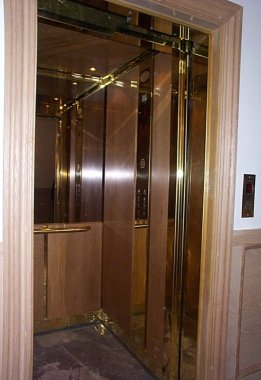
Elevator mirrors, indeed, help to alleviate the negative feelings that often accompany waiting.  Mirrors in an elevator can even be turned into something fun, as these flickr photos show.

There are many, many easy, non-technology, tools to help reduce the negative feelings that come with waiting.  Once the basic principles are understood in regards to the Psychology of Queueing, then it takes just some creativity to implement tools that satisfy the criteria above.

+++++

This post is part of a series on Queueing Theory.  Other articles can be found here:

  1. Queueing Theory: Part 1
  2. Queueing Theory: Part 2
  3. Queueing Theory: Part 3
  4. Queueing Theory: Part 4
  5. What is Waste?
  6. On Time-Traps and Waste
  7. Call Centers as Queueing Systems
  8. Travel Time & Waste
  9. Little’s Law for Product Development
  10. YouTube’s Queueing Properties
  11. Psychology of Queueing and Disneyland
  12. Queueing, Disneyland, and FastPass
  13. Multi-Tasking Leads to Lower Productivity
  14. Queueing Theory and Terrorism
  15. On Queueing Theory and Elevator Mirrors
Series Navigation«Queueing Psychology at the Gas PumpThe Variability Tree»

Short URL: http://bit.ly/dDMg

Share This Post:


  • Digg
  • Facebook
  • del.icio.us
  • Suggest to Techmeme via Twitter
  • StumbleUpon
  • LinkedIn
  • email

2-pizza teams (10)
3 C's (3)
5S (38)
A3 Report (9)
adoption (7)
agile/software (59)
ajax (4)
amazon (53)
apple (3)
apple iphone (7)
axiom (3)
Aza Raskin (9)
backcountry.com (2)
berlin (1)
bill gates (1)
bill marriott (1)
blog tag (1)
book reviews (4)
bullwhip effect (5)
business (394)
business plans (3)
busm361 (13)
BzzAgent (12)
call center and queueing (11)
car buying (2)
Carbonite (1)
change management (5)
chicago (1)
click fraud (1)
click-to-ship (21)
clocky (2)
colin powell (2)
community (2)
company interviews (18)
company interviews (6)
complexity (32)
costs (8)
culture (7)
customer experience (10)
customer obsession (52)
customer recovery function (1)
customer segmentation (8)
customer service (17)
design thinking (14)
digg (4)
drum-buffer-rope (38)
dublin (1)
dynamic systems (24)
eBay (6)
economics (3)
efficiency (4)
ethnography (29)
family (18)
featuritis (15)
flexibility (1)
forecasting (2)
four performance dimensions (2)
Fun With The 2×2 Matrix (1)
game theory (7)
Gemba (67)
genchi genbutsu (68)
general (135)
germany (1)
google (15)
heijunka (65)
holidays (1)
hoshin kanri (1)
how to be a human (1)
IDEO (2)
image uploading (1)
iphone (5)
ishikawa (69)
IT at Toyota (67)
just-in-time (4)
kaizen (4)
kanban (46)
law of instinct (1)
Leadership (43)
lean (165)
Lean Consumption Maps (98)
learning curve (1)
licketyship (1)
mark cuban (1)
martin luther king (1)
mary poppendieck (1)
metrics (73)
microsoft (6)
milton friedman (1)
moving average (1)
muda (68)
nba fines (1)
net promoter score (nps) (1)
obeya (39)
Off-Topic (1)
onstar (1)
operations (108)
pageviews (3)
pareto principle (39)
patent (1)
peanut butter manifesto (2)
philosophy (3)
Poka-Yoke (6)
poppendieck (3)
powerpoint sucks (2)
private equity (4)
process measures (6)
product development (20)
productivity (4)
quality (41)
quasimodal design (1)
queueing theory (41)
Raffle (1)
rational choice (2)
regression analysis (18)
respect for people (6)
root cause analysis (60)
sarah+palin (2)
seth godin (1)
simplicity principle (10)
six sigma (128)
snowboarding (2)
social media (3)
spam (1)
statistical process control (46)
strategy (46)
suburban (1)
supply chain (24)
takt time (8)
teaching (2)
team size (9)
technology (104)
the beer distribution game (1)
the profit tree (7)
The Visual Factory (11)
theory of constraints (41)
time (2)
timeline (3)
tony+hsieh (11)
toyota (75)
travel (1)
trump bankruptcy (1)
turnaround (5)
twitter (8)
uspto (1)
utah deal flow (2)
variation (69)
venture capital (1)
Visual Management (11)
waste (59)
website traffic (2)
Wing Chun (2)
wisdom of crowds (1)
wisdom teeth (1)
word-of-mouth marketing (18)
yahoo (2)
zappos.com (12)
zero defects (3)

WP Cumulus Flash tag cloud by Roy Tanck and Luke Morton requires Flash Player 9 or better.


If you enjoyed this post, please consider to leave a comment or subscribe to the feed and get future articles delivered to your feed reader.

Comments

The psychology of waiting sometimes overrides queuing efficiency. Supermarket checkout lines are a great example. Individual queues for each checker is the inefficient approach but it is almost universally used. The abundance of impulse purchase goods, trashy magazines and now flat panel looping ads shows that grocery stores prefer this inefficient model.

There is a Whole Paycheck err… Whole Foods near where I live that during peak periods will actually rope off the individual queues and line everyone up into a single queue (they do this because the individual queue start stretching down the aisles and cause grid lock). This invariably makes the shopper grumpy but is significantly faster.

Who knew there was a whole genre of elevator mirror pictures… good stuff.

[...] On Queueing Theory and Elevator Mirrors [...]

[...] On Queueing Theory and Elevator Mirrors [...]

Leave a comment

(required)

(required)


Additional comments powered by BackType