
The Pareto Principle is one of those almost universal truths that helps us explain the world around us. If you look carefully, you’ll see the 80/20 principle in everyday life. It’s everywhere – yes, even the TV shows we watch.
In this episode of “Pareto in the Wild”, we look at how Pareto can help us understand the outcomes in the TV show Law and Order: Special Victims Unit (SVU). I’ve actually never seen the show, but the folks at overthinkingit have analyzed the outcomes data from the tv show, which I show below:
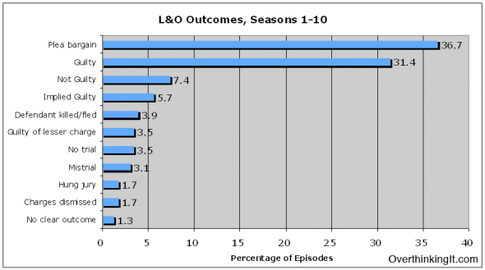
If you look carefully at the Law and Order outcomes data, you’ll see Pareto in action. Based on the data above, roughly 80% of the cases in Law and Order have an outcome of a “please bargain” and “guilty”. The remainder, or the trivial many are “not guilty”, “implied guilty”, “defendent killed or fled”, “guilty of lesser charge”, “no trial”, “mistrial”, “hung jury”, “charges dismissed”, and “no clear outcome”.
Become a Lean Six Sigma professional today!
Start your learning journey with Lean Six Sigma White Belt at NO COST





Leave a Reply