Note: If you arrived here searching for Justin Bieber, I’m sorry but you’ll see geeky stuff about Lean Manufacturing and Six Sigma instead. But, in the hope that I don’t dissappoint you, skip to the bottom of this article and you can get your Justin Bieber fix with him performing “Baby”.
On to other News
Assuming that worldwide search trends captures the interest and thoughts of a country, Google Trends is pretty helpful. Using Google Trends, we get some insight into what general worldwide regions are searching and one can compare search terms and view search volume as if we were navigating the intent of humans with a garmin gps.
Where is Six Sigma More Popular Than Justin Bieber
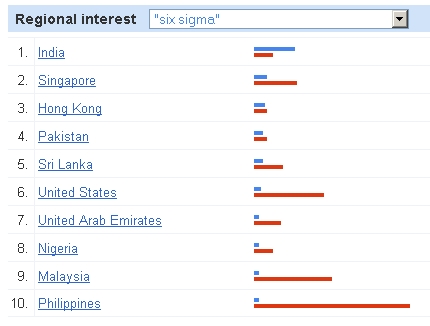
Yup, In India, “Six Sigma” as a search term is more popular than “Justin Bieber” as a search term (Six Sigma1, Justin Bieiber):

From this same chart, again assuming that search terms are a good way to capture the consciousness of a country, in Hong Kong and Pakistan, Six Sigma and Justin Bieber are competitively close. And, in Malaysia and the Philippines, Six Sigma is no match for Justin Bieber.
Look – even in Nigeria, Justin Bieber beats Six Sigma2 3 hands down.
What if we just looked at the worldwide trend for “Six Sigma”4 5 6 7 as a search term?
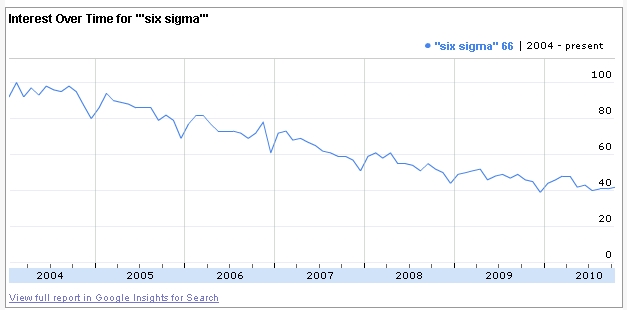
Using just “Six Sigma” 8 9 10 11 12 13 14, below is the worldwide trend:

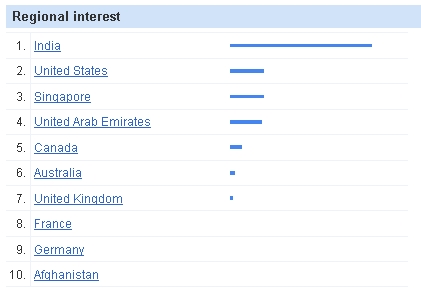
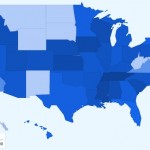
From the chart above, the interest for the search term “Six Sigma” is declining. By geography, we get:
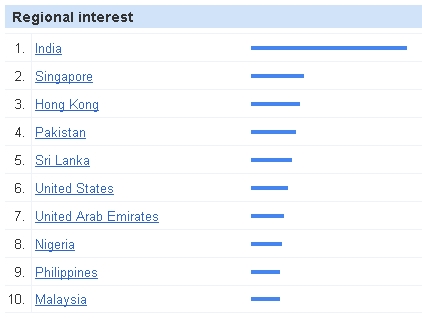
From the perspective of interest by geography, the following search for the term “Six Sigma” in order of highest to lowest:
- India
- Singapore
- Hong Kong
- Pakistan
- Sri Lanka
- United States
- United Arab Emirates
- Nigeria
- Philippines
- Malaysia
At least half of the countries search for the term “Six Sigma” are in Asia. I imagine this is true because many of operations (back office operations and shared services) that were based in the United States and Europe have moved or will be moved to Asia based operations.
It’s Your Turn
What do you think of the Google search data above? Any insights I might have missed?
Unrelated and Cheesy
Here’s Justin Bieber performing “Baby”:
- The Big Book of Six Sigma Training Games: Proven Ways to Teach Basic DMAIC Principles and Quality Improvement Tools is a great book that provides The quickest, easiest and most enjoyable way to get employees on track with Six Sigma concepts and tools. Each year Six Sigma methods save companies like Motorola, GE, Sony, and Microsoft billions that would have been lost to inefficiency in business processes. But learning Six Sigma methods can be a confusing experience, especially for people without a technical background. In this book, experienced Six Sigma trainer Chris Chen and Six Sigma Master Black Belt Hadley Roth take a proven, innovative approach to getting people from all experiential levels quickly up and running with basic Six Sigma concepts and tools. The latest in the hugely popular Big Book of Games series, The Big Book of Six Sigma Training Games features 50 games, exercises and activities that provide an enjoyable, non-intimidating way to: (a) Acquaint employees with Six Sigma–what it is, where it came from and what it can do for them and their companies, (b) Teach Six Sigma roles and organization, (c) Familiarize teams with DMAIC, as well as Failure Mode Effects Analysis, Pareto charts and other key improvement tools, (d) Gear teams up for success, (e) Help them identify problems in business processes and generate innovative solutions. All of the activities can be performed using common, everyday materials–such as playing cards, water, and paper clips–and each provides a thorough and enjoyable Six Sigma learning experience. ↩
- What is a Process? Exercise 1-1: Scrambled Letter, A Process Overview ↩
- What is a Product? Exercise 1-2: Group Bid, Customer Value. Exercise 1-3: Vacation Planning, Exploring Value Propositions ↩
- Focusing on Customer Needs. Exercise 1-4: Customer Landscapes at Affordable Prices. What is Process Variation? Exercise 1-5: Eyedropper Game ↩
- Team Roles. Exercise 2-1: Give-Get Game, Six Sigma Roles and Expectations. Exercise 2-2: Lights, Camera, Action – Dealing with Difficult Situations ↩
- Leadership. Exercise 2-3: Team Poker, Leadership and Decision Making. Exercise 2-4: Historical Leaders – Urgency, Vision, Message. Facilitation and Mentoring. Exercise 2-5: Meeting Facilitation Role Play. Exercise 2-6: 10 Things I do for Fun (Team Icebreaker) ↩
- Define Phase. Exercise 3-1: Doctor, Doctor (Stating the Problem and the Goal). Exercise 3-2: Precision Delivery Inc. (Stating the Business Case for Improvement). Exercise 3-3: Break it Down (Individual Process Map). Exercise 3-4: World Hunger (Project Scope, Creating Scope Statements). Exercise 3-5: Dream Car (Finding CTQ Measures) ↩
- Measure Phase. Exercise 4-1: Unscrambling the Federal Reserve (Collecting and Organizing Data). Exercise 4-2: Who’s Here (Collecting and Displaying Data). Exercise 4-3: Precision Delivery Inc. (Data Collection and Sampling). Exercise 4-4: Super Fine Peanuts (Applying Operational Definitions). Exercise 4-5: Object of the Game (Assessing the Measurement System). Exercise 4-6: Scrambled Letters (Measuring Process Sigma) ↩
- The Analyze Phase. Exercise 5-1: Scrambled Letters (Developing Theories). Exercise 5-2: Process Landscapes (Process Analysis). Exercise 5-3: How To Verify Hypothesis ↩
- The Improve Phase. Exercise 6-1: Zoo Juggle (Brainstorming to Improve a Process). Exercise 6-2: Creative Juicer (Generating Creative Solutions.) Exercise 6-3: Well, Well, Well (Data Collection, Piloting, Risk Assessment). Exercise 6-4: Cube Puzzle (Implementation Planning) ↩
- The Control Phase. Exercise 7-1: Break it Down (Individual Process Documentation). Exercise 7-2: Snow Flake (Group Process Documentation). Exercise 7-3: Scrambled Letters (Tracking Performance) ↩
- Dealing with Resistance. Exercise 8-1: Changing Seats (Resistance to Change). Exercise 8-2: Personal Appearance Change Challenge. Exercise 8-3: Change Champion (Getting Buy in to Change). Exercise 8-4: Paper Animals (Reaction to Change). Exercise 8-5: Island Dance (Managing the Fear of Change) ↩
- Team Behaviors. Exercise 9-1: Clue (Team versus Individual Goals). Exercise 9-2: Balloon Sculpture (Defining Goals with Ambiguous Metrics). Exercise 9-3: Four Suits, Five Hands (Exploring Team Behaviors). Exercise 9-4: I Want to Drive (Setting Common Expectations) ↩
- Project Management. Exercise 10-1: Camel by Committee (Integrating Project Teams). Exercise 10-2: Domino Designs (Building Effective Project Teams). Exercise 10-3: Team Theater (Effective Teamwork). Exercise 10-4: Draw It (Communicating Effectively) ↩
![]() |
![]() |
![]() |
||
This post was written by Pete Abilla | ||||


Jeff Bezos and Root Cause Analysis
The Apple iPhone Supply Chain
The Toyota A3 Report
Queueing, Disneyland, and FastPass
Quality and Continuous Improvement;
{ 1 comment… read it below or add one }
The validity of the survey and consequent data on the Justin Beiber-Six Sigma comparison notwithstanding, so-called popularity of Lean Six Sigma (LSS) is one thing and its initial success in implementation and subsequent effectiveness in a day-to-day routine operations is another. Majority of Indian products and services cannot be considered world class – regardless of what they think of LSS.
Very, very few companies in the world have a truly effective Lean Six Sigma environment – no matter what the bluster is from many companies on how good they are. Also, many Japanese companies are world’s best in quality WITHOUT extensive so-called Six Sigma implementation in a formal manner – even though most of the Lean Six Sigma concepts do originate from them. The reason may very well be that Japanese companies ALSO practice Hoshin Kanri (for smooth dissemination of company objectives and policies throughout the organization) and practicing it is in their psyche – unlike companies elsewhere.