
This article discusses Creative Tension and its role in Innovation and Change Management. One principle in Wing Chun is the maintaining of forward tension. To explain, I’ll draw the distinction between Tension and Energy and show how this principle in Wing Chun can be applied to Change Management.
Tension is a type of Energy
A Wing Chun maxim goes as follows:
soft and relaxed strength will put your opponent in jeopardy
That maxim means that forward tension is not necessarily using force, or forcing through a barrier or “pushing through”. But, there is soft force, or tension, such that when a gap presents itself, then the hand or arm shoots forward like a spring. The “shooting forward” is not done with force, but is an unleashing of potential energy.
Using that definition, then, Forward Tension is much different than the overly-used business term “Breakthrough.” In the context of Forward Tension, the notion of “breakthrough” is ridiculous, because it connotes a forcing of oneself or of one’s ideas. Forcing anything only invites resistance and rebellion, not conversion.
So, in sum, tension is really potential energy and when a gap presents itself, that potential energy becomes kinetic energy. Forward Tension works with the current context in such a way that does not invite rebellion or resistance or eventual back-biting. It is open, but straightforward.
Application to Change Management
Don’t force things on people. The most humane approach to change management is to treat those involved in the change as human beings; this means having a dialogue — listen, speak, listen some more, argue a little, and steadily deposit goodwill.
As much as I like love data, I also fully understand that data does not soften hearts or change people’s minds: true change happens when people feel heard, have given their opinion, are willing to try something new, and are part of the change. The challenge in change management is largely an emotional one; a psychological one; a relational one.
Hold The Tension
Without forcing or pushing of people, maintaining the tension encourages discussion, debate, and invites people to inquire and become curious about the topic of change. That is the key: behave in such a way that it invites people to learn, argue, debate, and eventually try it out.
Tension in Wing Chun
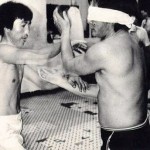
The video below shows Sifu Grados in Chi Sao (Sticky Hands). This sensitivity exercise demonstrates the principle of holding the tension and visually explains the principle of transformation of potential energy to kinetic energy very well.
NOTE: none of the movements are rehearsed. What is taught and practiced are the principles and how those principles are applied during Chi Sao depends on the situation.
Become a Lean Six Sigma professional today!
Start your learning journey with Lean Six Sigma White Belt at NO COST



Leave a Reply