customer obsession

i invite all former amazonians to share their experiences while an employee at amazon.com. here are some general guidelines:

do:
* details, details, details
* share about your interview experience
* what did you do there
* when and where did you work for amazon.com
* your least favorite core value & why
* why did you join
* why did you leave

don’t:
* openly slander people by name (don’t mention names)
* don’t share your own name
* sign your post with (your gender, years worked at amazon)

here’s the process:

to submit your amazon story, please CONTACT ME. to make sure that the comment is not spam, please provide a valid email address — I WILL NEVER SHARE YOUR EMAIL. then, i’ll post your story as you submitted it.

to read other amazon work experiences, please go the the Amazon Work Experience Page.

*************************************

amazon.com employees have ingrained in them the amazon core values:

customer obsession is, arguably, the keystone value for the entire company: start with the customer, and work backwards. for most companies, a mission statement is a cheesy activity, popularized by steven covey. at amazon, there’s no cheesiness about it: the employees believe it and live it. here are a few examples of customer obsession:

example one

i was in a meeting and jeff bezos and jeff wilke were present. during this meeting, several of us were arguing over technology and process for the fulfillment side of amazon. during this debate, jeff wilke raised his voice and reminded all of us that “remember guys, nothing is holy but the customer. we can argue and debate and you can disagree with me or jeff [bezos], but it boils down to what’s right for the customer.” this was timely reminder and solidified my belief that the top brass at amazon really believed and lived the core values.

example two

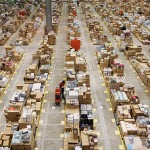
pushing 300,000 – 600,000 units of product per day through a fulfillment center is no easy task. gratefully, amazon’s home-grown software and efficient processes help to deal with the immense volume. sometimes, if there are inventory gliches or poor product flow, an activity known in warehousing as “product chasing” occurs. “chasing” is when a product is ordered, but it is nowhere to be found in the (1MMft^2) facility. in reality, it is somewhere, but according to the inventory software the product is supposed to be in its assigned bin, but it has been moved somehow, drifted to another bin, or stolen. this defect is called Inventory Record Defect Rate and is one of the most important metrics at amazon, and is highly scrutinized and reviewed by Bezos and his senior team. why is it important? because when the front-end amazon store allows you to order something, the precondition is that the product and the quantity desired is currently in an amazon facility: the software follows a very complicated algorithm based on network optimization, shortest path techniques, and traveling salesman routing; a check is made against the inventory database — in real time — how many are available, which facility, and how many have been committed already. when the order drops into the assigned facility, the picker goes to the bin where the product is supposed to be, but because IRDR is poor, the item is not there. this situation leads to two following options: (1) go to a local store and buy the item and ship it to the customer or (2) do a “network flip”, where the assigned facility “flips” the order to another facility that has that product. option (2) is ideal, but during the holiday season, it is very difficult to do. during the holidays, option (1) is common.

doing option (1) is heroic and is a true example of customer obsession at work: it’s not about serving all customers as an aggregate, but it’s about serving one really well, several million times. at amazon, they really believe this and live this.

example three

usability and ease-of-use are prime at amazon. amazon runs usability test frequently, making sure that each store on the site and the flow is optimal, memorable, and meets user’s expectations. this is also true for internal software and process engineering work at amazon. the same core value of customer obsession runs it’s thread through all work — external and internal.

summary

customer obsession is much more than customer satisfaction or customer happiness. the philosophy is about doing what is right for the customer first, then working backwards. moreover, a firm belief in customer obsession focuses the enterprise on being customer-focused and less competitor-focused. there are way too many companies that follow the close-follower mentality or are too competitor-focused. that approach blinds the enterprise and causes them to forget the true needs of the customer.

Share This Post:


  • Digg
  • Facebook
  • Yahoo! Buzz
  • del.icio.us
  • FriendFeed
  • Suggest to Techmeme via Twitter
  • Reddit
  • Google Bookmarks
  • Live
  • StumbleUpon
  • LinkedIn
  • Slashdot
  • MySpace
  • E-mail this story to a friend!

2-pizza teams (9)
3 C's (3)
5S (37)
A3 Report (9)
adoption (6)
agile/software (59)
ajax (4)
amazon (50)
apple (2)
apple iphone (6)
axiom (3)
Aza Raskin (8)
backcountry.com (2)
berlin (1)
bill gates (1)
bill marriott (1)
blog tag (1)
book reviews (4)
bullwhip effect (5)
business (381)
business plans (3)
busm361 (13)
BzzAgent (12)
call center and queueing (11)
car buying (2)
Carbonite (1)
chicago (1)
click fraud (1)
click-to-ship (21)
clocky (2)
colin powell (2)
community (2)
company interviews (18)
company interviews (6)
complexity (32)
costs (8)
culture (1)
customer experience (4)
customer obsession (45)
customer segmentation (8)
customer service (13)
design thinking (11)
digg (4)
drum-buffer-rope (38)
dublin (1)
dynamic systems (24)
eBay (6)
economics (3)
efficiency (3)
ethnography (28)
family (18)
featuritis (15)
flexibility (1)
forecasting (2)
four performance dimensions (2)
Fun With The 2×2 Matrix (1)
game theory (7)
Gemba (60)
genchi genbutsu (65)
general (136)
germany (1)
google (15)
heijunka (64)
holidays (1)
how to be a human (1)
image uploading (1)
iphone (4)
ishikawa (67)
IT at Toyota (66)
just-in-time (4)
kaizen (1)
kanban (42)
law of instinct (1)
Leadership (33)
lean (148)
Lean Consumption Maps (94)
learning curve (1)
licketyship (1)
mark cuban (1)
martin luther king (1)
mary poppendieck (1)
metrics (73)
microsoft (6)
milton friedman (1)
moving average (1)
muda (64)
nba fines (1)
net promoter score (nps) (1)
obeya (36)
Off-Topic (1)
onstar (1)
operations (108)
pageviews (3)
pareto principle (38)
patent (1)
peanut butter manifesto (2)
philosophy (3)
Poka-Yoke (3)
poppendieck (3)
powerpoint sucks (2)
private equity (4)
process measures (5)
product development (19)
productivity (4)
quality (39)
queueing theory (40)
Raffle (1)
rational choice (2)
regression analysis (18)
respect for people (3)
root cause analysis (56)
sarah+palin (2)
seth godin (1)
simplicity principle (10)
six sigma (122)
snowboarding (2)
social media (3)
spam (1)
statistical process control (46)
strategy (44)
suburban (1)
supply chain (24)
takt time (8)
teaching (2)
team size (9)
technology (105)
the beer distribution game (1)
the profit tree (7)
The Visual Factory (11)
theory of constraints (41)
time (2)
timeline (3)
tony+hsieh (9)
toyota (73)
travel (1)
trump bankruptcy (1)
twitter (8)
uspto (1)
utah deal flow (2)
variation (69)
venture capital (1)
Visual Management (9)
waste (56)
website traffic (2)
Wing Chun (2)
wisdom of crowds (1)
wisdom teeth (1)
word-of-mouth marketing (18)
yahoo (2)
zappos.com (9)
zero defects (3)

WP Cumulus Flash tag cloud by Roy Tanck requires Flash Player 9 or better.


If you enjoyed this post, please consider to leave a comment or subscribe to the feed and get future articles delivered to your feed reader.

Comments

incomprehensibilities

[...] According to Peter, Amazon will go to great lengths to fulfill customer orders. If a product that was ordered isn’t available in the warehouse, two things may happen: (1) [they] may go to a local store and buy the item and ship it to the customer or (2) do a “network flip”, where the assigned facility “flips” the order to another facility that has that product. Option (2) is ideal, but during the holiday season, it is very difficult to do. During the holidays, option (1) is common. [...]

[...] [Price]->[Selection]->[Convenience]->[Customer Experience]->[Return Customer]->[…]. In other words, The Flywheel analogy is meant to show that Price, Selection, and Convenience RESULT in a great Customer Experience and DRIVE Return Customers. Drawing is one of the things I do poorly, so my diagram above might not capture the point of the Flywheel. Please forgive me on that, but understand that Price, Selection, and Convenience RESULT in a great Customer Experience and DRIVE Return Customers. [...]

[...] Interesting posts about Customer Obsession from Shmula and Real-time Focus Group Feedback at AOL by Jason Calacanis, CEO of Weblogs, Inc. [...]

[...] Customer obsession the Amazon way: pushing 300,000 – 600,000 units of product per day through a fulfillment center is no easy task. gratefully, amazon’s home-grown software and efficient processes help to deal with the immense volume. sometimes, if there are inventory gliches or poor product flow, an activity known in warehousing as “product chasing” occurs. “chasing” is when a product is ordered, but it is nowhere to be found in the (1MMft^2) facility. in reality, it is somewhere, but according to the inventory software the product is supposed to be in its assigned bin, but it has been moved somehow, drifted to another bin, or stolen. this defect is called Inventory Record Defect Rate and is one of the most important metrics at amazon, and is highly scrutinized and reviewed by Bezos and his senior team. why is it important? because when the front-end amazon store allows you to order something, the precondition is that the product and the quantity desired is currently in an amazon facility: the software follows a very complicated algorithm based on network optimization, shortest path techniques, and traveling salesman routing; a check is made against the inventory database — in real time — how many are available, which facility, and how many have been committed already. when the order drops into the assigned facility, the picker goes to the bin where the product is supposed to be, but because IRDR is poor, the item is not there. this situation leads to two following options: (1) go to a local store and buy the item and ship it to the customer or (2) do a “network flip”, where the assigned facility “flips” the order to another facility that has that product. option (2) is ideal, but during the holiday season, it is very difficult to do. during the holidays, option (1) is common. [...]

Customer Service Obsession: Love thy patients the Amazon way.

 Is obsessive customer service part of your medical practice?Amazon is taking a page from Nordstrom’s ‘heroic customer service’ book. Why? Because it’s good business. I posted o…

[...] shmula » customer obsession : Business, Technology, and Stuff in Between Very cool article on “customer obsession” at Amazon.com (tags: amazon customer_experience service) [...]

[...] Again, if I am correct in my research and claims in this article, then to make one Apple iPhone, material comes from 3 countries, traveling to China to be assembled, inventoried, and then fulfilled to retailers and to customers via purchases from the Apple Store. Is it any wonder they are asking for $500+ per unit? It is important to note, that the price has nothing to do with the costs structure — Lean and Friedman both teach us that the price has everything to do with what the market will bear. The firm has a target cost structure, a break-even point, but the price they go-to-market with is about the market demand, not internal cost structure. Assuming that I’m correct in my assertions in this article, I can only imagine that this complex supply chain is a challenging one to manage. [...]

Leave a comment

(required)

(required)


Additional comments powered by BackType