This article is a guest post from Noeradji Prabowo, a continuous improvement practitioner in Indonesia. In this article, he shares a simple and effective application of Kaizen and the Kaizen frame of mind to a common activity in business meetings: drinking coffee.
Learn more about Noeradji Prabowo after the article.
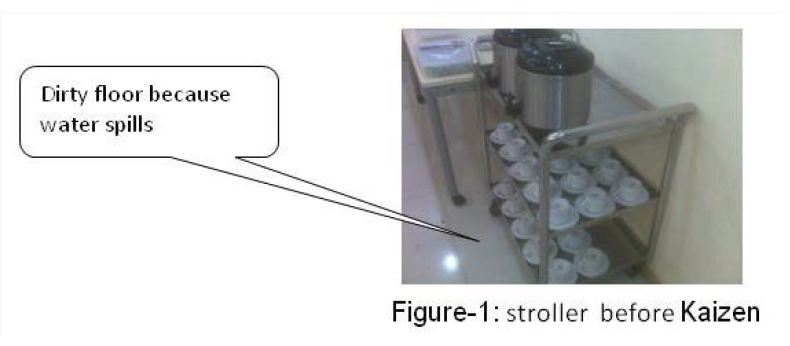
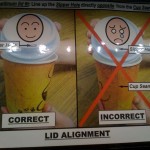
Beginning in November 2011, we held training at a motorcycle tire manufacturer; in the class room we’ve encountered an interesting idea of kaizen. For participants, we provided drinks: tea or coffee are provided in a stroller or a drink cart. The result is often dirty floor because water, tea, or coffee spills from the cart onto the floor.
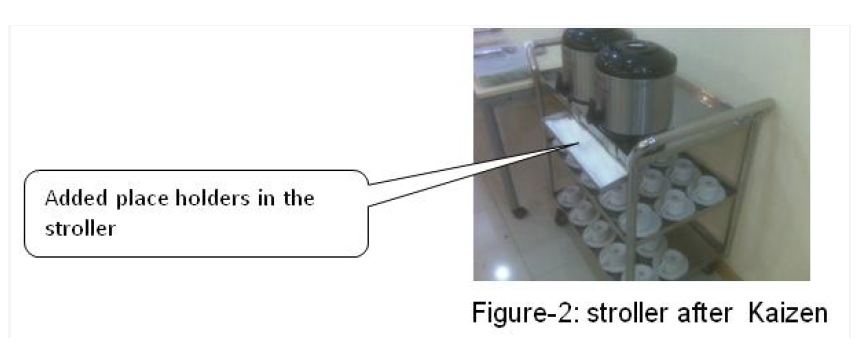
To cope with spills on the floor, we decided to add place holders in the stroller or cart, thereby eliminating the non-value added work of mopping spilled water, tea, or coffee spills on the floor.
About Noeradji Prabowo
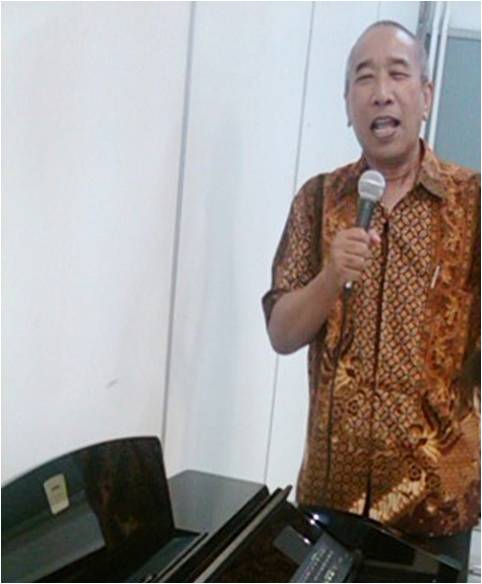 Noeradji Prabowo is a Senior Consultant at PQM Consultants – a Consulting Firm that specializes in helping clients in consulting and training to build continuous improvement culture by making productivity and quality improvement through people works.
He is a Consultant who specializes in area of Productivity and Quality Improvement. He has served as consultant for shop floor management teams from various industries, services and manufacture, national and multinational companies, by providing consulting and/or training to make improvement happen in their workplaces through strong genba-oriented processes.
Some of his experiences are helping client’s organizations in building Sustainable Excellence by creating visual and error-free workplace; Creating Disciplined People and Bright Factory through 5S implementation; creating reliable equipment by eliminating its losses through Total Productive Maintenance implementation; building quality culture through Total Quality Management; people development through Management Development Program, and creating a flow production process, pulled processes and reduce excessive inventory by implementing Operation Excellence program.
He began his career as a Field Coordinator at Schlumberger(oilfield and information Services Company). He then joined PT Cold Rolling Mill Indonesia (steel manufacturer) as counterpart of HAY Management, to set up Compensation System.
He obtained his degree in Physics (Padjadjaran University) and post graduate diploma in Production Management (Institute for Management Education and Development/IPPM).
Training he has attended among others: Program for Quality Management, Statistical Process Control, Shopfloor Management, On the Job Training Instructor, Total Productive Maintenance and ISO 9000, Understanding the ISO 14001 Specification, Implementing EMS, Strategic Thinking, Toyota Way. He has also attended Quality Management Training in Singapore, Osaka, Japan and Detroit, USA.
Become a Lean Six Sigma professional today!
Start your learning journey with Lean Six Sigma White Belt at NO COST

Agile Scout says
Interesting. Since Kaizen is about continuous improvement… how do you improve it further?
“Non value-add work” – One would think that even having the “holder” is non value add.
What is true value add for this?
Maybe, creating a module that prevents drips at all?
When do you stop kaizen and the thought of kaizen on something IS the non-value add? Is there a point when you’ve improved it… too much?
Adi Gaskell says
I cycle a lot in my spare time and the British cycling team have become famous for their philosophy of ‘marginal gains’, ie making small improvements in lots of areas, adding up to medal winning performance. It’s a nice approach and epitomizes Kaizen for me.