
In a previous post, I argued that there are distinct differences between Service and Manufacturing – and, especially, how one goes about applying the principles of Lean to Service versus Manufacturing.
The first difference I’ll explain in this post: Simultaneous Production and Consumption, which is a state of affairs not likely in manufacturing, but is quite unique in services.
Series on Difference Between Service Versus Manufacturing
Go here for details on applying Lean for Service Operations. For other posts in this series, please refer to the table below:Simultaneous Production and Consumption
Let’s learn about one of the main differences between service and manufacturing.
Production and Consumption in Service Operations
In service businesses, you typically have simultaneous production and consumption of the service. For example in a restaurant, production and consumption of the service are taking place at the same time. Indeed, this is clearly true of most fast food operations, such as Starbucks and consequently, how Lean at Starbucks.
Production and Consumption in Manufacturing Operations
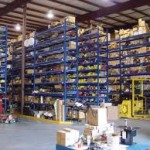
This is very different from a manufacturing situation. In most manufacturing operations, there are inventories between each stage of production, and a finished goods inventory which can be increased or decreased as demand fluctuates.
Take, for example, a production process that involves three stages. We start with our raw materials and begin our production process. When we get to the end of stage one we have semi-finished goods that go into an inventory.
We would then do more production of these semi-finished goods (or sub-assemblies). At the end of this stage, they would become finished goods and would go into the finished goods inventory. They would then go to a retail inventory, onto a shelf in a retail outlet, and finally to the consumer. The semi-processed and finished goods might be in inventories for a considerable amount of time (in most operations – one aspect of Lean is to minimize Inventory). There would be a considerable lag between the time the product was produced and the time it was consumed.
In a Service operation, there are no lags as there are in Manufacturing. Indeed, there is almost a co-creation of the product between the manufacturer and the customer.
In this situation, one has to think of the principles of Lean a different way and, consequently, how one applies Lean for Services.
Become a Lean Six Sigma professional today!
Start your learning journey with Lean Six Sigma White Belt at NO COST



Leave a Reply