Interested in a free 25+ eBook on the 7 Wastes? Please DOWNLOAD HERE.
Product Management is often confused with Product Marketing and Technical Program Management. At some companies, all of the above are actually seperate delineated positions. At Amazon, however, they are pretty much the same job entitled: Technical Product and Program Manager (TPPM). Funky, ain’t it?
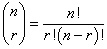
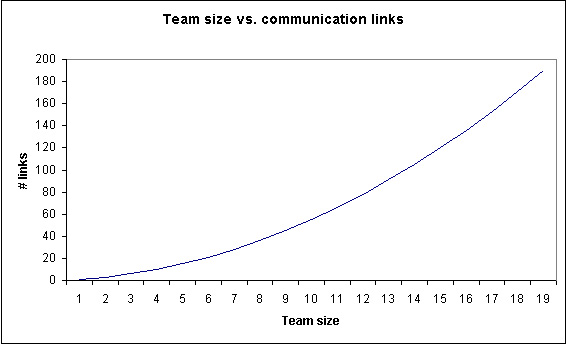
Actually, there’s very good reason why Amazon has done it this way. Amazon is really big on small teams. A concept at Amazon is the notion of the 2-Pizza Team. Every team at Amazon, no matter how large the project is, is comprised to 2-Pizza Teams. A 2-Pizza Team (2PT) is — a team where the team size is no larger than 2 pizzas can feed. This approach to team size works really well and produces more agile development and release and deployment.
I spent a short time on the merchants@ group at Amazon — the group responsible for the partners (Best Buy, Polo, Toys ‘r’ Us, etc.). Product Management is an exciting area of business and has the potential to touch the customer more than most functions in business.
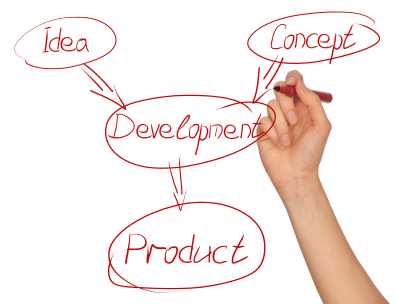
In this post, I want to quickly define standard Product Management, then in succeeding posts, tweak the standard definition a little bit and show how it works at Amazon. The following is a great breakdown of Product Management:
Market Research:
This refers to the activities of studying a market to understand the customer needs, competitive landscape, and market forces – with the ultimate goal of uncovering opportunities for creating product enhancements as well as new products.
This is done via conversations with customers or potential customers, talking to customer-facing teams such as sales and support, studying reports and articles on the marketplace, test driving competitive products, keeping tabs on customer behavior, and other such activities.
This culminates with the PM preparing a business case, product strategy and/or business requirements document (BRD) detailing how to capitalize on the uncovered opportunities.
Product Definition and Design:
a) Product Definition refers to the activities of specifying what a product needs to do. This is usually done via what is referred to as Market Requirements Document (MRD) or Product Requirements Document (PRD). This document may include information such as product vision, target market, competitive summary, detailed description of product features, prioritization of features, use cases, system requirements, performance requirements, sales and support requirements, etc.
b) Product Design refers to the activities of specifying the look and feel of the product including the user interface (UI) and the user interaction with the product – covering the whole spectrum of user experience. In larger companies the PM works with UI designers or interaction designers to create this, while in startups the PM may do all of these.
I consider this to be the most valuable among a PM’s activities – so much so that I actually think product manager jobs which don’t include this responsibility are really not product manager jobs at all!
Project Management:
This refers to the activities of leading cross-functional teams including engineering, QA, UI design, marketing, sales and support to develop and launch the product on-time and on-budget. This may include securing resources, creating project timelines, tracking progress against timeline, identifying critical paths, getting additional resources when needed, and communicating status to the executive team.
In larger companies, Project Managers actually perform most of these activities with the support of PM’s. In very small startups, the PM may be asked to do these by herself. In some companies, the Engineering Lead may do most of these activities as well.
Evangelizing the Product:
This includes the activities of communicating the product benefits, features and target markets, and in general championing the product to internal teams such as sales, marketing, support and executives. This also includes evangelizing the product to external audience such as press, analysts and customers.
In larger companies, the PM is supported by the Product Marketing, Marketing Communications (MarCom) and/or Press Relations (PR) teams in evangelizing to external audience.
I consider this to be the second most valuable among a PM’s activities – especially evangelizing to the sales & marketing teams, and the executives to create excitement around the product.
Product Marketing:
This refers to the activities of outbound messaging – telling the world about the product. This includes creating collateral such as datasheets, brochures, website, flash presentations, press packages, trade shows and more.
In larger companies, the product marketing activities are almost always separated from the PM. They’re instead performed by the Product Marketing Manager. The biggest shortcoming of this arrangement is the resultant inefficiencies in communication and the weakening of outbound messaging.
In some companies the terms ‘Product Management’ and ‘Product Marketing’ are used synonymously and one person is responsible for all activities. In companies where there are separate ‘Product Management’ and ‘Product Marketing’ groups, the latter group performs all the activities mentioned in this category.
Product Life Cycle Management:
This refers to the activities of managing a product as it goes through its life cycle from ideation to launch to growth to maturity, and eventually to decline.
This includes tasks such as product positioning, pricing and promotion, product portfolio management, competitive strategy, making build/buy/partner decisions, and identifying and developing partnerships. The PM works with Product Marketing, Business Development and MarCom teams on many of these activities.
In later posts, I’ll focus a little bit on Product Managment for software, which will include requirements gathering, and UML related stuff. Pretty much, the Amazon approach to Technical Product and Program Management and how Product Design and differentiation becomes a focus when entering a new market.
search terms for this article:
customer focused product management, product focused business definition, Customer Focused products, customer focus product management, product management at Amazon, product focused definition, product focused management, product management amazon, product management at amazon com, product management marketing group activity, product manager amazon, product managers customer focus quotes, product-focused business definition, what does it mean for a project manager to be product focused?, activities marketing research of amazon, industry customer focus product management, amazon product manager business manager, amazon product manager marketing, amazon product manager pizza team, amazon product manager requirements, amazon product manager roles, customer focused business product, customer focused product design tips, customer-focused business product, define focus product strategy, focus product, what does it mean to be product focusedRelated Articles:
![]() |
![]() |
![]() |
||
This post was written by Pete Abilla | ||||


The Apple iPhone Supply Chain
Jeff Bezos and Root Cause Analysis
The Toyota A3 Report
Queueing, Disneyland, and FastPass
Zipcar Customer Experience: Variability, Utilization, and Queueing
Process Control and Luck
Poka Yoke Example: Prevent Error Through Embarrassment and Humiliation
Queueing Theory: Part 3
Emergency Room (ER) Wait Times
Quality and Continuous Improvement;
{ 1 comment… read it below or add one }
“A 2-Pizza Team (2PT) is — a team where the team size is no larger than 2 pizzas can feed.”
for some definition of “feed”, which does not mean “all that the person will eat if the food exists”. otherwise you’d have an awful lot of 1- or 2- person teams…