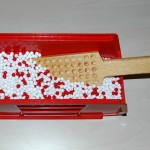
The Red Bead Experiment is a metaphor for problems, where the red beads represent “bad” and white represent “good”. It is a teaching tool mostly used in manufacturing or instruction in quality management. The Red Bead Experiment was created by Dr. W. Edwards Deming, the person who influenced Toyota who, later, would develop The Toyota Production System.
This post explains how to play the Red Bead Experiment, the Lessons Learned from the Red Bead Experiment, and how to facilitate the Red Bead Experiment. This post also contains a video tutorial of the Red Bead Experiment. This is Part 1 of 6 of the Red Bead Experiment.
How To Play The Red Bead Experiment
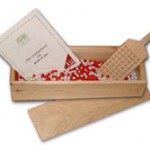
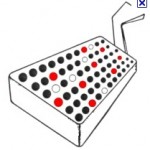
The Red Bead Experiment consist of a large bowl with white beads and red beads and a paddle. Each player draws the paddle full of beads. Here are the specific rules for the game:
- Objective: Produce white beads and avoid producing red beads (defects).
- Instructor: Plays the role of the manager.
- Quality Manager: This person counts the number of red beads after each draw.
- Controller: This person records the number of red beads as relayed by the Quality Manager.
- Workers: Have as many workers as you desire, but aim to keep the game to ~40 minutes.
- Rounds: Try to have several rounds, where a round is defined as each worker has had a turn to scoop the paddle into the bowl of beads. In each round, as the manager, play the following roles:
- Round 1: Manager sets target for no more than 5 red beads. If violated, worker will have to work 2 hours overtime without pay.
- Round 2: Manager introduces a bonus program where the worker that produces below 5 red beads will receive a $500.00 bonus.
- Round 3: Manager is mean – yells, belittles, threatens, compares workers to each other, and has a big temper.
- Why the Rounds: The rounds are meant to show the futility of such management approaches of bonuses, threats, and other incentives. No matter what the motivational approach, producing fewer than 5 red beads is futile.
Red Bead Experiment – Data Analysis
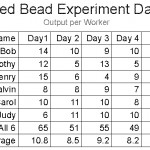
After several rounds, the Controller should have a table that looks like the following:
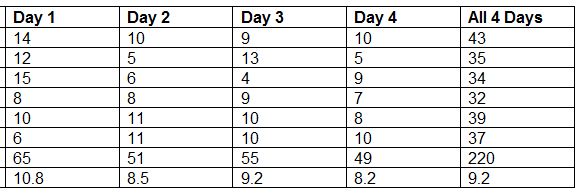
The bottom row shows the average of red beads per worker per day.
The instructor can then use this data set to introduce the class to statistical process control, variation, common cause variation, special cause variation, and upper limits and lower limits.
Red Bead Experiment Video Tutorial
Below is a video tutorial of the Red Bead Experiment. This video is Part 1 of 6.
Now, onto lessons-learned.
Red Bead Experiment – Lessons Learned
- All variation comes from the process.
- There was no evidence than any worker was better than the other.
- The workers were doing their best, yet they were not improving – could not improve.
- Intimidation, bullying, did not help the workers improve.
- Monetary incentives did not help the workers improve.
- All processes have natural variation.

Video Transcript
Narrator: This is Dr. Deming’s red bead experiment. We use it at Hanford to illustrate the five core functions of ISMS, especially feedback. We use volunteers from the audience to produce white beads for the white bead corporation using many modern management techniques such as numerical targets. The number three comes up several times during this exercise. We have monetary incentives and accountability and tabulated reports made to the president of the company.
We also demonstrate some statistics. Many tools get abused and used during this exercise. We hope you find this video useful as a safety meeting topic, or perhaps as “train the trainer” video for those who would like to lead their red bead experiment. We hope you find this experience entertaining but also educational.
Steve: Good morning. I’m Steve Prevette, your foreman. I’d like to welcome all you prospective employees as employees of the White Bead Production Corporation. We do have a new contract at Hanford to produce white beads for the Department of Energy, and as part of your orientation I would like to introduce the president of the company, Mr. Steven Byers.
Steven: Welcome, candidates. We look forward to completing our screening process and selecting a number of workers. As the foreman has mentioned, we do have a new contract. It calls for increased production. We need new workers.
We have used our HR department to screen the candidates and we are confident that we now have a pool of above-average workers only, which is very important of course. With that, I would like to have the foreman select the final candidates, and let’s get started with the production.
Steve: Yes, you all were given pink slips as you entered this room, or some of you were given pink slips at least, the lucky ones. Our job postings are as follows: We need six willing workers. They must be willing to put forth best efforts. Continuity of your job is dependent on your performance, your performance alone.
Educational requirements are minimal and experience in pouring is not necessary. Now there should be six people out there with “Willing Worker” number one, two, three, four, five, and six badges there. Ah, one very excited willing worker there! Come on forth! There’s got to be five other excited, willing workers, so come on down. Line up right along here. One, two, three, four, five, and six.
Oh, we have three not-so-willing workers out there some place. Come on! You’re not making good first impression upon your management. Come on, come on down. Okay, I think we have our six workers. Line up in order, one through six. That’s part of the screening process here, can you count to six?
Of course, the people who really need to count are our keyway inspectors. We have two keyway inspector sheets out there. They must be able to distinguish red from white and be able to count to 20. These people only have to count to six. Experience is not necessary, so my two keyway inspectors, come on forward. Come on up here. Two keyway inspectors.
Steven: You’re a little short on workers.
Steve: I am? Where’d my sixth worker go? I saw six people up. Okay, but inspectors cannot mingle with the workers. Inspectors come over here. These are the two inspector chairs. Now, I do have a sixth willing worker out there. One, two, three, four, five¦ Number three! Who’s got willing worker number three? Okay, I hear Tom [inaudible 00:03:40] is out there. Oh, no, we found our three.
Willing worker number three, take your spot in the third place there. We’re back on track here. Very good. Now we have our keyway department come forward. We kept them separate from the workers because this is very important, and we don’t want the workers to talk either, because that decreases productivity. I will point out our Increase Productivity poster,and if you spend your time talking you are decreasing productivity.
Now I should have an inspector general out there. Inspector general should have the same qualifications as the inspectors, but must have a loud voice, because you talk. Now you come forth and stand behind your two inspectors. You should make sure that they are very ethical people because the quality of our product depends upon our keyway department. I need an accurate count of the beads that we produce, and of course to record that count, there should be a recorder out there. Somebody should have a pink slip that says “recorder.”
Will the recorder please come forward and sit next to the view graph machine here? Ah, very good. Very qualified looking recorder. I’m sure you are good in addition and division, and you must be sharp. Sit right there. Here is your writing utensil, and here is payroll because next thing we must do is record our payroll. We are going to have the willing workers state their first name and spell it, and then I will repeat it to you and you will record it on the sheet. Willing worker number one, your first name?
Curt: Curt, C-U-R-T.
Steve: Say that again?
Curt: Curt, C-U-R-T.
Steve: C-U-R-T. Yes, now you may write it. Willing worker number two?
Marty: Marty, M-A-R-T-Y.
Steve: M-A-R-T-Y. Now my trouble worker here, number three.
Ed: My name is Ed, E-D.
Steve: E-D. Don’t get ahead of me. Now, procedure compliance is very important here, you understand. Don’t get ahead of me. Worker number four?
Debbie: I’m Debbie, D-E-B-B-I-E.
Steve: D-E-B-B¦ Sure it’s not Y?
Debbie: It’s I-E.
Steve: I-E, okay. Willing worker number five?
Ken: Ken, K-E-N.
Steve: K-E-N. And number six?
Sid: Sid, S-I-D.
Steve: S-I-D. Like those simple names. Very good. Very, very good. Okay, we have our payroll. Now of course a very important thing is your on-the-job training. We have a QA program here. We have our Be A Quality Worker poster. I have already pointed out our productivity program. We have a performance incentive to increase productivity. You all understand this? Increase productivity. And of course we have Take Pride in Your Work and Do It Right the First Time.
Get instructions on how to conduct the Red Bead Experiment >>>
 |
 |
 |
 |
 |
| Blog Article | Excel | PowerPoint | Video |
| Module | Description | Type | |
| Overview |
What is Six SigmaThe various definitions of Six Sigma is explained in this 5:42 video. We specifically discuss 6 definitions of "Sigma", ending with the most relevant definition which is related to the DMAIC Method of Problem Solving. |
 |
|
| Overview |
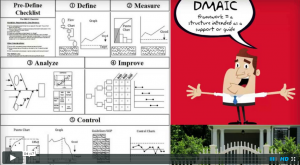
The DMAIC FrameworkIn this 4:17 video, we explain the DMAIC framework and give an introduction to each phase in DMAIC. We specifically show the storyboard for each phase in the DMAIC framework. |
 |
|
| Overview |
DMAIC versus PDCAArticle describes how PDCA is used in Lean and the similarities and common history between PDCA and DMAIC. |
|
|
| Overview |
History of Six Sigma and LeanIn this video, we go through the various contributors of Six Sigma, their contribution, and why it's important in the practice of modern Six Sigma. We also go into the history of the Toyota Production System and how the term "lean" was coined. Video is 7:36 long. |
 |
|
| Overview |
Lean History and TimelineThis article shows a comprehensive history and timeline of Lean and of continuous improvement beginning in the 1600's. |
|
|
| Overview |
Black Belt CertificationIn this article, we provide various resources where you may take the Black Belt exam should you choose to do so. We also discuss the positive and negative of Black Belt certification. |
|
|
| DEFINE | |||
| Define |
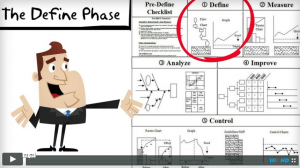
The Define Phase StoryboardWe introduce the Define Phase and show the Define Storyboard, a high level map of what the phase is about and the expected outputs. Video length is 3:50. |
 |
|
| Define |
Business Needs AssessmentIn this video, we discuss how to identify business needs of an organization and how to take that knowledge and transform it into a formal DMAIC project that will get the backing and support from top management. Video length is 6:46. |
 |
|
| Define |
Project CharterIn this 5:37 minute video, we explain the role of the project charter and its importance in Six Sigma DMAIC projects. Video length is 5:37. |
 |
|
| Define |
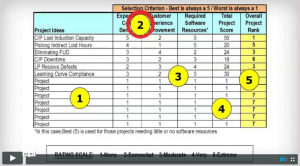
Project Selection MatrixIn this short 2:51 minute video, we learn a simple and effective method for prioritizing between competing priorities. This method is important for the selection of an improvement project. |
 |
|
| Define |
Problem StatementArticulating the problem well gets you much closer to a solution. In this video, we show you how along with several real world examples of effective problem statements. Video length is 5:42. |
 |
|
| Define |
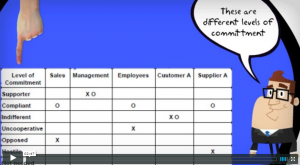
Stakeholder AnalysisIdentifying stakeholders and their needs is one of the most important steps in Define. This is especially crucial if there are any influential stakeholders that are resistant to your message. Video length is 2:47. |
 |
|
| Define |
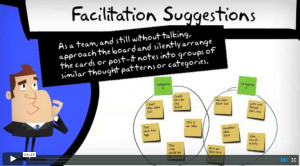
Affinity DiagramAffinity Diagram is a tried and true method for brainstorming and coming up with ideas. Learn how to apply this technique in this video. Video length is 4:25. |
 |
|
| Define |
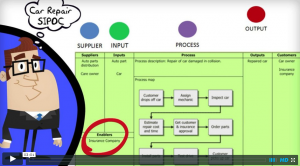
SIPOCIdentifying the key spots where measurements can be taken in crucial. This video will show you how to do it. Video length is 3:01. |
 |
|
| Define |
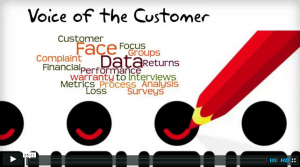
Voice of the Customer and CTQIn this video spanning 5:11, we explain Voice of the Customer and how Six Sigma is rooted in the customer. We explain how to translate Voice of the Customer into Critical to Quality Metrics. |
 |
|
| Define |
Critical to Quality TreeArticle explaining the critical to quality tree, with examples, and a template to download so you can create your own for your six sigma projects. |
|
|
| Define |
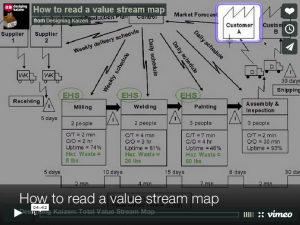
Value Stream MapIn this 4:42 video, you will learn understand the value stream map symbols and learn how to design your own value stream map. We provide a zip file of VSM Symbols for you to download. |
 |
|
| Define |
Kano ModelWe explain the Kano Model to identify service and product characteristics that should be "satisfiers" and the ones that be "good enough" and don't need to go any further. |
|
|
| MEASURE | |||
| Measure |
The Measure Phase StoryboardWe introduce the Measure Phase and show the Measure Storyboard, a high level map of what the phase is about and the expected outputs. |
|
|
| Measure |
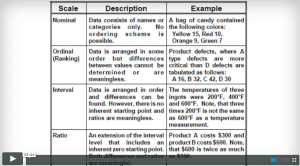
Data Types in Six SigmaIn this article we explain the various types of data, how they're different, and what they tell us about process behavior. We will also learn how to collect data. Video length is 5:24. |
 |
|
| Measure |
Descriptive StatisticsIn this module we learn various data measures that tell us key characteristics of a data set. We also begin the foundation for our discussion on distributions in a later module. |
|
|
| Measure |
DistributionsThis is a brief introduction to statistical distributions and what inferences we can draw from them. |
|
|
| Measure |
Graphical Representation of DataGraphically representing data effectively is required to effectively communicate meaning. In this module we learn various graphical methods and how to do them. |
|
|
| Measure |
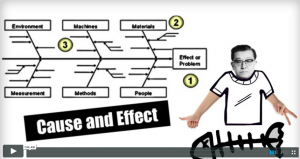
7 Quality ToolsWe briefly introduce each of the 7 quality tools. We follow this video several videos where we focus on the detailed of each of the 7 quality tools. Video length is 4:46. |
 |
|
| Measure |
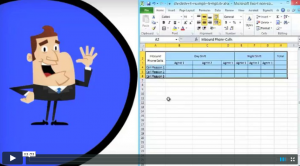
Check SheetsIn this HD video, we explain the checksheet, what it is used for, see various examples of checksheets, how to create one, and be able to download a checksheet template from the Shmula content library. Video length is 3:53. |
 |
|
| Measure |
Pareto ChartIn this 4:48 minute video, you will learn the history of the Pareto Principle, why it's important, and how to apply the Pareto Principle in your lean and six sigma efforts using excel. |
 |
|
| Measure |
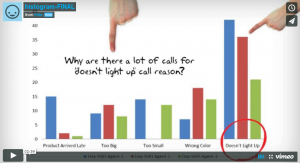
HistogramThis video on the Histogram explains what it is, when to use it, and how to use it. Video length is 3:01. |
 |
|
| Measure |
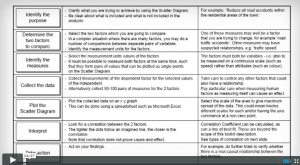
Scatter PlotIn this 4:27 short video, we introduce the Scatterplot, what it is, why use it, and how it can be helpful in your six sigma projects. |
 |
|
| Measure |
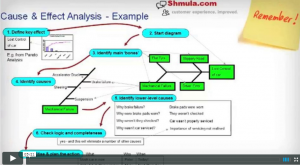
Cause and Effect DiagramThis 5:21 minute video explains the cause and effect diagram - what it is, when to use it, and how to create one. |
 |
|
| Measure |
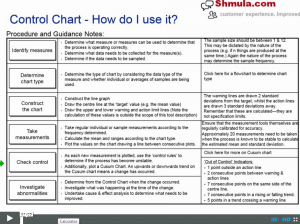
Control ChartIn this video, we introduce you to the control chart - what it is, where to use it, when to use it, and how it's used. Video length is 7:05. |
 |
|
| Measure |
Run ChartIn Progress |
In Progress | |
| Measure |
Process Cycle EfficiencyProcess Cycle Efficiency is a more modern tool that looks at processes from the perspective of value and waste. We show you how to do it and why it's important. |
In Progress | |
| Measure |
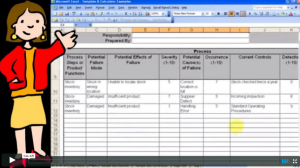
FMEAFailure Mode Effects Analysis is a tried and true method and technique for quickly identifying ways where process problems can occur and how to quickly mitigate them. Video length is 4:45. |
 |
|
| Measure |
Basic StatisticsIn this article, we go in depth to explain basic data types, scales, and the language of six sigma. |
|
|
| Measure |
Using Z ValuesWe learn about Z Values or the Z Score with applications in Six Sigma projects. |
|
|
| Measure |
Sample Size CalculationsIn this module we learn the underpinnings of sample size calculations and how they are used in six sigma. We provide a sample size calculator in the template section also. |
|
|
| Measure |
Introduction to VariationThis article introduces the learner to the concept of variation and how it impacts the customer experience. |
|
|
| Measure |
Red Bead Experiment Part 1Introduction to red bead experiment. |
 |
|
| Measure |
Red Bead Experiment Part 2In part 2, we actually do a quick run through the experiment. |
 |
|
| Measure |
Red Bead Experiment Part 3In this video, we explain and go through more runs of the experiment. |
 |
|
| Measure |
Red Bead Experiment Part 4In this video we continue our experiment and go through some of Dr. Deming's most famous quotes. |
 |
|
| Measure |
Red Bead Experiment Part 5Continuing the experiment, with a focus on how to best facilitate an event. |
 |
|
| Measure |
Red Bead Experiment Part 6In this last video in the series, we go through the key lessons learned from Deming's famous experiment on variation. |
 |
|
| Measure |
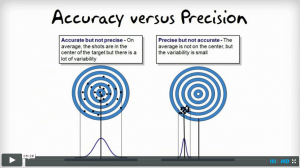
Measurement System AnalysisIn this video we discuss variation and how it impacts our methods of measuring. Video length is 5:28 and we show examples along with tips on how to deal with bad metrology. Video length is 5:28. |
 |
|
| Measure |
Gauge R&RIn this video we explain the Gauge R&R Test and provide various examples of where and how it may be applied in industry. |
In Progress | |
| ANALYZE | |||
| Analyze |
The Analyze Phase StoryboardWe introduce the Analyze Phase and show the Analyze Storyboard, a high level map of what the phase is about and the expected outputs. |
In Progress | |
| Analyze |
BrainstormingWe introduce various methods of brainstorming. Some conventional and some not very and more modern. Some of these methods are taken from Design Thinking and have been found to be very effective in identifying innovative and simple solutions to problems. |
In Progress | |
| Analyze |
5 Whys and Fishbone DiagramIn this video we explain the 5 Why exercise and show many examples. We extend the 5 Whys and show how it naturally leads to the Fishbone Diagram. |
In Progress | |
| Analyze |
Verifying Root CausesWe introduce hypothesis testing and various methods for doing so including the Regression, T Test, Chi Square, and ANOVA. |
In Progress | |
| Analyze |
Hypothesis TestingIn Progress |
In Progress | |
| Analyze |
RegressionIn Progress |
In Progress | |
| Analyze |
T TestIn Progress |
In Progress | |
| Analyze |
Chi SquareIn Progress |
In Progress | |
| Analyze |
ANOVAIn Progress |
In Progress | |
| IMPROVE | |||
| Improve |
The Improve Phase StoryboardWe introduce the Improve Phase and show the Improve Storyboard, a high level map of what the phase is about and the expected outputs. |
In Progress | |
| Improve |
Change ManagementWe introduce you to several change management models that have been found to effective in practice. We show what they are, how to do them. |
In Progress | |
| Improve |
Solution Selection MatrixThe Solution Selection Matrix is a simple tool that helps a team vote and decide on which solution makes the most sense to put resources behind in improvement projects. |
In Progress | |
| Improve |
Process CapabilityWe discuss process capability and how it's different from a process not in control. We discuss its importance. |
In Progress | |
| Improve |
Cost / Benefit AnalysisWe introduce the concept of Cost and Benefit Analysis and provide several ways at showing cost savings from Six Sigma Projects. |
In Progress | |
| Improve |
Poka YokeAs part of the Improve Phase, we introduce the concept of Poka Yoke, or error proofing, as a way to prevent defects before they even occur. We show may examples and teach the principles behind Poka Yoke. |
In Progress | |
| CONTROL | |||
| Control |
The Control Phase StoryboardWe introduce the Control Phase and show the Control Storyboard, a high level map of what the phase is about and the expected outputs. |
N/AN/A | |
| Control |
Before / After ParetoWe show ways to visually see before and after results of your project. |
In Progress | |
| Control |
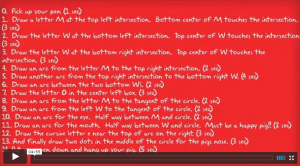
Standard Pig GameIn this 4:55 minute video, we show you a simple and effective game that teaches the importance of Standard Work. This video should be watched prior to the video on Standard Work. |
 |
|
| Control |
Standard WorkStandard Work is a foundation of Lean and Six Sigma. In this 5:36 minute video we explain Standard Work and show its role in continuous improvement. |
 |
|
| Control |
Control ChartsWe discuss the various control charts, why they're important, and how to create them given your process and given your data type. |
In Progress | |
Become a Lean Six Sigma professional today!
Start your learning journey with Lean Six Sigma White Belt at NO COST